
To put your car or van in a different colour, you can cover it in vinyl film or give it fresh paint. Both change the look, but they work in very different ways, and the right one depends on the state of your paint, how long you’ll keep the vehicle and what any lease or finance agreement says. This guide sets out the differences plainly.
Key takeaways
- A wrap sits on top of your paint and can come off, while a respray is permanent.
- Film follows the surface underneath, so damaged paint shows through.
- GOV.UK lists colour as a change you must record on your V5C, so update yours if a wrap changes the main colour.
- Tell your insurer either way.
How a wrap and a respray differ
A wrap is a layer of vinyl film applied over your existing paint. A respray replaces the colour of the paint itself.
That difference shapes almost everything else. Because film sits on top, it can be taken off later with your original paint still underneath, whereas a respray can’t be undone in the same way and the new colour stays until someone sands it back and paints over it again.
Finishes differ too. Vinyl film comes in gloss, satin and matte, and it can carry printed designs, which is how a business van gets its branding. There’s more on the looks you can achieve on our vinyl styling page, and for working vehicles see commercial vehicle wraps. With a respray, you choose a paint colour and live with it.
| Vehicle wrap | Respray | |
|---|---|---|
| Permanence | Can be removed | Permanent |
| Original paint | Stays underneath the film | Replaced by the new colour |
| Finishes | Gloss, satin, matte and printed designs | Depends on the paint chosen |
| Paint condition needed | A sound surface, as film shows what’s beneath | Defects can be repaired as part of the paint job |
| DVLA colour change | Update the V5C if the main colour changes, to be safe | Record it on the V5C, as GOV.UK lists colour |
| Lease and resale | Can come off before return or sale | Permanent, so check the terms first |
Why paint condition matters for a wrap
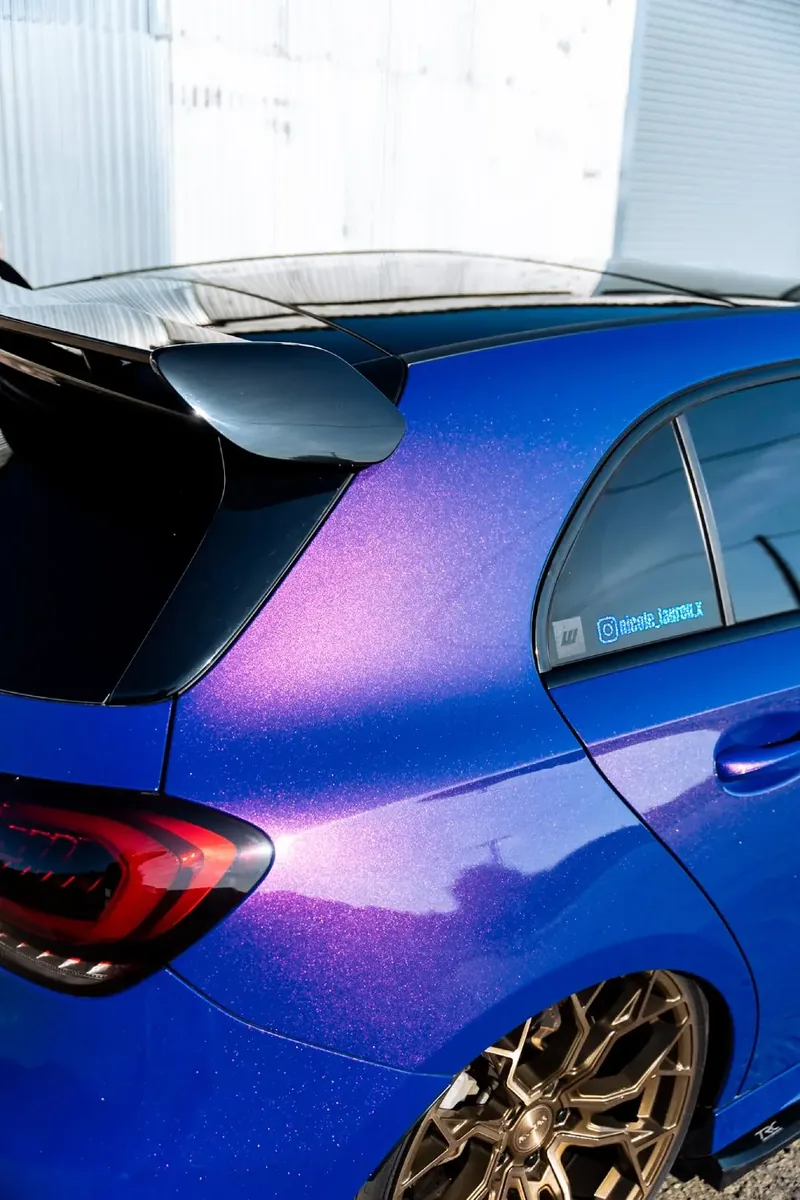
Vinyl film follows the surface it’s applied to. It’s thin. It moulds closely to every curve, which is exactly why it looks so good on sound paint and also why it can’t hide what’s wrong with paint that isn’t. The same quality means chips, dents and peeling lacquer won’t vanish under a wrap. They often show through as bumps or texture.
If your paint is in fair shape, a wrap is a sensible way to change colour. If it’s flaking or badly marked, you may need repair work first, and at that point a respray starts to look more logical. Be honest about the bodywork before you decide.
DVLA and insurance after a colour change
GOV.UK lists colour among the changes you must record on your V5C, and that clearly covers a respray. The guidance doesn’t mention wraps specifically. If your wrap changes the main colour of the vehicle, updating the V5C is the safe thing to do.
Insurance is simpler. Whichever route you take, let your insurer know about the colour change, because a policy that still lists the old colour no longer describes the vehicle you actually drive and that’s an awkward thing to discover after a claim.
When a wrap is not the right choice
Sometimes paint makes more sense. Damaged paint that needs repairing anyway is the clearest case, because if the bodywork has to be fixed and refinished regardless, film on top just adds a step.
Then there’s permanence. If you want a factory style finish for as long as you own the vehicle and have no intention of going back to the original colour, a respray suits that thinking.
Finally, a leased or financed vehicle where the agreement doesn’t allow changes. Read the terms before you book anything. Some agreements set out exactly what you can and can’t do to the bodywork, and a colour you can’t reverse is a hard thing to explain at the end of the term.
Choosing a wrap with Identity Wraps
If a wrap suits your vehicle, we’d be glad to help. We’ve been trading since 2014 and have wrapped more than 3,000 vehicles. We’re an Avery Dennison SI Level 2 installer and Metamark accredited, and your wrap comes with a warranty. The price is fixed and agreed before work starts.
Our workshop is in Tonbridge, and from there we serve Kent, Essex and Surrey. We’re rated 4.9 on Google from 75 reviews (read 3 Nov 2026). For more on switching colour, see our colour change page, read about vehicle wrapping in general, or get in touch to talk it through.
Frequently asked questions
Does a wrap damage the paint underneath?
Nobody can honestly promise it won’t, because so much depends on what’s underneath. Weak paint, such as flaking lacquer or a poor previous repair, is where problems tend to start, and it can lift when film comes off. The condition of your paint before the wrap goes on is the best guide, along with removal done properly when the time comes. Sound factory paint gives the film the best surface to start from, so look closely at the bodywork first.
Do I need to tell DVLA if I wrap my car?
GOV.UK lists colour as a change you must record on your V5C, though it doesn’t mention wraps by name. If your wrap changes the main colour of your car, update the V5C to be safe.
Can I wrap a car with chipped or damaged paint?
You can, though you mightn’t like the result. Film follows the surface beneath it, so chips, dents and peeling lacquer usually show through. Damage that’s more than minor generally needs repairing first, and if that repair turns out to be substantial, a respray may be the more sensible route.
Is a wrap or a respray better for a leased car?
Start with your lease agreement, since that decides what’s allowed. Some agreements restrict changes to the bodywork, so check before you commit. Where changes are permitted, a wrap has a clear advantage because it can come off before you hand the car back.
Call us on 01622 963 370 or message us on WhatsApp on 07498 894 357.