
Window tint law in the UK is strict about the glass at the front of your car and says nothing about the glass behind you. The rules are short. They’re easy to follow once you know which date applies to your car, and this guide covers what the law says, what the percentages mean and what happens if your front glass is too dark.
Key takeaways
- The rear windscreen and rear passenger windows have no tint rules.
- For cars first used on or after 1 April 1985, the front windscreen must let at least 75% of light through and the front side windows at least 70%.
- Older cars need 70% on the front windscreen and front side windows.
- Too much tint can lead to a prohibition notice, a penalty notice or a court summons.
What the law says about tinted windows
The law only limits tint on the front windscreen and the front side windows, and the limits depend on when your car was first used. According to GOV.UK’s tinted vehicle window rules, there are no rules for the rear windscreen or the rear passenger windows. The back is up to you.
| Window | First used 1 April 1985 or later | First used before 1 April 1985 |
|---|---|---|
| Front windscreen | Must let at least 75% of light through | Must let at least 70% of light through |
| Front side windows | Must let at least 70% of light through | Must let at least 70% of light through |
| Rear windscreen | No rules | No rules |
| Rear passenger windows | No rules | No rules |
It’s also illegal to fit or sell glass that breaks these rules. If you’re buying a used car with dark front glass, check it before you hand over any money, because the front windows on a car you’ve just bought are your problem once it’s yours.
In Northern Ireland, nidirect’s guidance on tinted vehicle windows sets out the same 75% and 70% limits. It also points out that glass is often slightly tinted already when the vehicle is made.
What “let 70% of light through” means
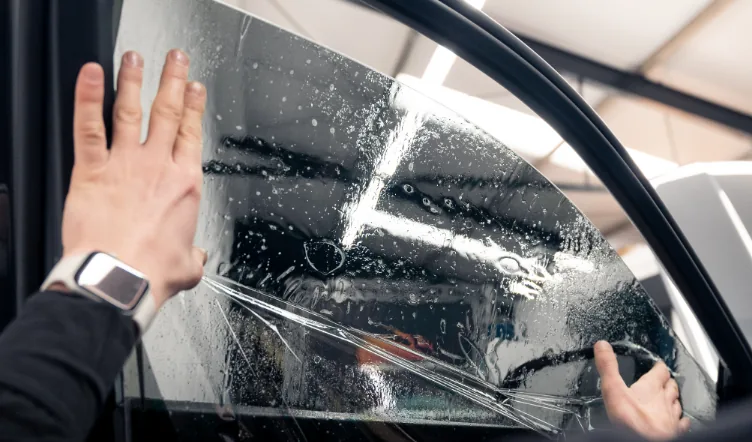
The percentage tells you how much light passes through the glass. Higher number, lighter window.
These figures trip people up. People sometimes assume a bigger figure means a stronger tint, but it’s the opposite, so when the law says your front windscreen must let at least 75% through, it’s setting a minimum amount of light, and in practice that means the front glass has to stay fairly clear.
Factory glass often carries a slight tint already. So the starting point for your front windows isn’t 100%, which is worth keeping in mind before anything is added to the front of your car.
How the rules are checked and enforced
Police or DVSA vehicle examiners check tint with light measuring equipment. Nobody guesses. It isn’t a judgement made by eye, and if your front glass lets through less light than the law allows, the reading will show it.
The consequences can be more disruptive than drivers expect. A prohibition notice stops you using the vehicle on the road until the extra tint is removed. You could also receive a penalty notice, or a court summons.
None of that is worth it for a darker front window.
When rear tint is not the right choice
Rear tint is legal, but legal doesn’t mean it suits how you use the car every day.
If you rely on a clear view out of the back when reversing or parking, darker rear glass may make that harder, particularly at night. Visibility matters. Some drivers simply prefer the view they already have. Think twice, too, if the car isn’t yours to change, for example if it belongs to an employer or is on a lease with conditions about alterations, and check with whoever owns it before you book anything.
Tinting your car at our Tonbridge workshop
We fit car window tinting at our workshop at Unit 1, Alanco House, Pattenden Lane, Marden, Tonbridge, TN12 9QT. Identity Wraps has been trading since 2014, we’re fully insured, and we’re rated 4.9 on Google from 75 reviews (read 3 Nov 2026).
We serve Kent, Essex and Surrey from Tonbridge, and if you’re in Essex there’s more on our page about car tinting in Essex. For general questions about our work, see our FAQs, or get in touch to talk about your car.
Frequently asked questions
Is it legal to tint rear windows in the UK?
Yes. GOV.UK says there are no rules for the rear windscreen or the rear passenger windows, so the light limits only apply to the glass at the front.
How dark can front side windows be?
Front side windows must let at least 70% of light through, whatever date your car was first used. Remember that a higher percentage means lighter glass. Factory glass is often slightly tinted already, as nidirect points out, so the front windows don’t start from completely clear glass, and anything added to them needs to leave the total light passing through at or above that minimum when it’s measured.
What happens if police find my windows are too dark?
You could face a prohibition notice, which means you can’t use the car on the road until the extra tint has been removed. GOV.UK also lists a penalty notice or a court summons.
Does the 1985 date apply to my car?
It depends on when your car was first used, which is the date GOV.UK uses for these rules. Cars first used on 1 April 1985 or later need at least 75% on the front windscreen, and cars first used before then need at least 70%. Check your documents first.
To talk about tinting your car, call us on 01622 963 370 or message us on WhatsApp at 07498 894 357.